Admissions open for 2026–2027. Up to ₹10,000 off for early admissions. Limited seats available
Is My Child Too Young for Preschool? What Research Actually Says
Worried your child is too young for preschool? Learn what child development research actually says, and how to know when your child is ready.
1/13/20263 min read
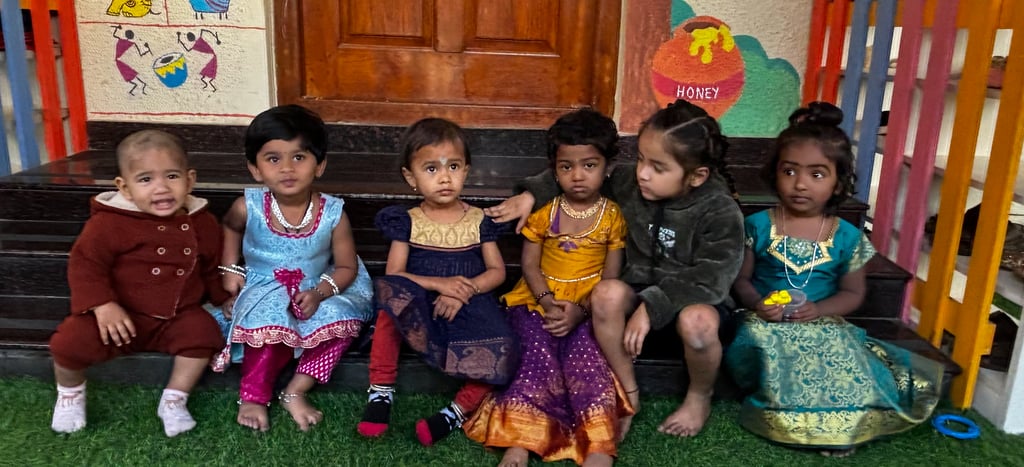
One of the most common and emotionally loaded questions parents ask today is, “Is my child too young for preschool?” It usually doesn’t come from curiosity alone. It comes from comparison, pressure, advice from relatives, social media milestones, and a quiet fear of getting it wrong. Some parents worry they are starting too early and taking away childhood. Others worry they are starting too late and holding their child back. In the middle of all this noise, it becomes hard to hear what truly matters, your child.
Modern research in early childhood development tells us something very important and often overlooked: preschool readiness has far less to do with age and far more to do with emotional and developmental preparedness. Birthdays may be convenient markers for admissions, but they are not reliable indicators of whether a child is ready to thrive in a learning environment.
For decades, age has been treated as the deciding factor for preschool entry. Two years old. Two and a half. Three. These numbers are easy to measure, but children are not. Development in early childhood is uneven and deeply individual. Two children born just weeks apart can show completely different levels of emotional regulation, language development, curiosity, and adaptability. Research consistently shows that children develop skills in waves rather than in straight lines. This is why using age alone to decide preschool readiness often leads to unnecessary stress for both children and parents.
What research actually highlights is the role of brain development in the early years. Between birth and the age of five, a child’s brain is forming connections at an extraordinary pace. However, these connections are not built through academics or worksheets. They are built through relationships, emotional safety, play, and repeated positive experiences. A child who feels secure, understood, and emotionally supported is far more likely to explore, communicate, and engage with learning naturally. When emotional safety is missing, even the most well-designed academic environment can feel overwhelming.
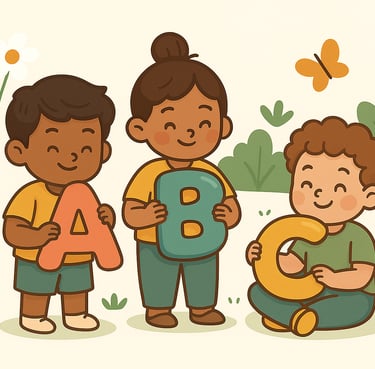
One of the biggest misconceptions parents face is the belief that preschool readiness means a child should already know letters, numbers, or colours. Research tells us the opposite. The most meaningful signs of preschool readiness are emotional and behavioural, not academic. A child who can slowly separate from a caregiver with reassurance, who shows curiosity about their surroundings, who can engage with toys or activities even for short periods, and who responds to gentle routines is showing far stronger readiness than a child who can recite alphabets but feels anxious or withdrawn.
Language development is another area that often causes concern. Many parents worry that if their child is not speaking enough, preschool might be too early. Research indicates that language blossoms most effectively in emotionally safe, socially rich environments. When children feel pressured or compared, speech can actually regress. When they feel relaxed and accepted, communication tends to grow organically. Preschool environments that prioritise emotional comfort often support language development better than home environments filled with constant correction or performance expectations.
Starting preschool too early, before a child is emotionally ready, does not usually lead to faster development. Instead, studies show it can result in increased anxiety, frequent crying, resistance to routines, withdrawal, or even physical symptoms such as stomach aches and sleep disturbances. These are not signs of a “difficult” child. They are stress responses. When children experience repeated stress without adequate emotional support, learning shuts down. The brain focuses on survival, not curiosity.
On the other hand, when children enter preschool at a time when they feel secure enough to explore, the benefits are clear and long-lasting. Research links emotionally responsive early learning environments with better social skills, improved self-regulation, stronger confidence, and a healthier relationship with learning in later years. These children are not rushed into academics, yet they often transition into formal learning more smoothly because they trust the environment and the adults within it.
This brings us back to the original question. Is your child too young for preschool? Research suggests a better question to ask is this: Does my child feel emotionally safe enough to explore a world beyond me? Emotional safety does not mean the absence of tears. It means the presence of comfort, reassurance, and trust. A child who cries but can be soothed, who hesitates but eventually engages, who seeks reassurance and then returns to play is learning something far more important than academics. They are learning that the world is safe.
For parents, this can be deeply reassuring. There is no universal “right age” to start preschool. There is only the right time for your child, shaped by temperament, environment, and emotional readiness. Waiting does not mean delaying development. Starting later does not mean missing out. What matters most is that when your child begins this journey, they feel respected, understood, and supported.
At InuPinu Preschool & Daycare, we believe that early education should never begin with pressure. It should begin with trust. When emotional safety comes first, learning follows naturally, joyfully, and at a pace that honours childhood.
Kalpanasha Education LLP
Outer Ring Rd, adjacent to Reliance Smart Bazaar, behind Hanuman Temple, Vijaya Bank Colony, Dodda Banaswadi, Bengaluru, Karnataka 560043
Programs
hello@inupinupreschool.com
82969 06303
© 2026. All rights reserved.

Reach Out to us at
Mon-Fri: 9:00 a.m. to 07:00 PM
Sat: 10:00 a.m. to 03:00 PM
Others