Admissions open for 2026–2027. Up to ₹10,000 off for early admissions. Limited seats available
Understanding NEP 2020 and Early Childhood Education: How InuPinu Is Building Strong Foundations the Right Way
Early childhood is not just the beginning of a child’s education; it is the foundation on which all future learning, behaviour, confidence, and emotional well-being are built. Recognising the importance of these formative years, the National Education Policy (NEP) 2020 introduced a historic shift in how early education is viewed and delivered in India. For the first time, children between the ages of three and eight are placed at the centre of the education system through a thoughtfully designed Early Childhood Care and Education (ECCE) framework.
1/30/20263 min read
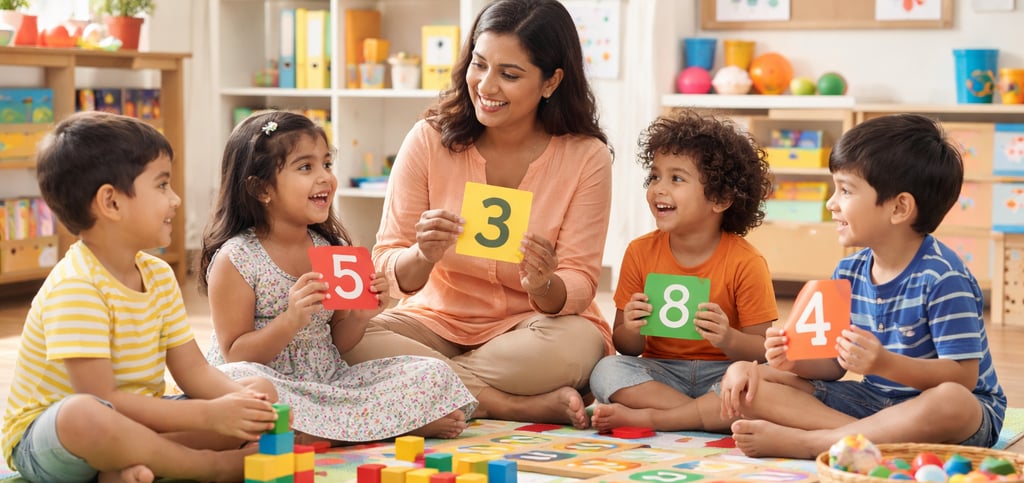
At InuPinu Preschool and Daycare, this philosophy resonates deeply with our core belief, that learning in the early years should be joyful, meaningful, and developmentally appropriate. Our curriculum and everyday classroom practices are closely aligned with the principles laid out in NEP 2020, ensuring that children receive not just education, but a strong and nurturing start to life.
NEP 2020 introduces the 5+3+3+4 structure, replacing the older 10+2 system, and places early childhood education within the “Foundational Stage.” This stage spans ages three to eight and includes preschool, kindergarten, and Grades 1 and 2. What makes this shift significant is the acknowledgment that preschool education is not a preparatory add-on but an essential part of formal learning. This means that what children experience in preschool directly influences how well they transition into primary school and beyond.
One of the most important aspects of NEP’s approach to early childhood education is the emphasis on play-based and experiential learning. The policy clearly moves away from rote memorisation, early academic pressure, and worksheet-heavy classrooms. Instead, it encourages learning through play, exploration, storytelling, music, movement, hands-on activities, and real-life experiences. Research consistently shows that young children learn best when they are engaged, curious, and emotionally secure, and NEP strongly supports this understanding.
At InuPinu, play is not seen as a break from learning; it is learning. Whether children are building with blocks, engaging in pretend play, exploring materials in our Discovery Zone, or participating in guided group activities, every experience is intentionally designed to support cognitive development, creativity, language skills, and social-emotional growth. Our classrooms are designed to feel safe, warm, and inviting, because NEP also highlights the importance of a stress-free and joyful learning environment during the early years.
Another key pillar of NEP 2020 is holistic development. Early childhood education is not limited to academics alone. The policy outlines the need to nurture cognitive, emotional, social, physical, and creative development simultaneously. This means helping children develop independence, emotional regulation, empathy, communication skills, motor coordination, and self-confidence alongside early literacy and numeracy concepts.
InuPinu’s curriculum is built around this holistic vision. Language development happens naturally through conversations, storytelling, rhymes, and shared reading rather than forced writing practice. Early numeracy is introduced through sorting, patterns, comparisons, counting in real-life contexts, and hands-on activities rather than abstract sums. Children are encouraged to express themselves through art, music, movement, and imaginative play, supporting creative and emotional expression. Physical development is equally prioritised through outdoor play, movement-based activities, and fine motor experiences that prepare children for writing when they are developmentally ready.
Foundational Literacy and Numeracy (FLN) is another major focus of NEP 2020, but it is often misunderstood. The policy does not advocate early reading and writing drills. Instead, it emphasises building strong foundations by developing listening skills, vocabulary, comprehension, number sense, and logical thinking. The goal is not early performance but long-term learning success.
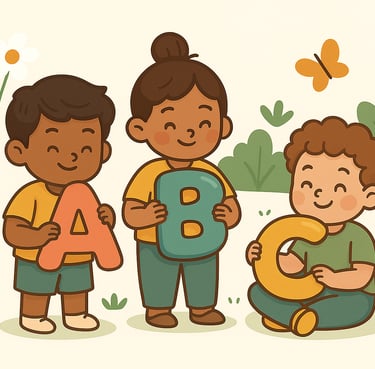
This philosophy aligns seamlessly with InuPinu’s approach. We focus on readiness rather than rushing milestones. Children are exposed to letters, sounds, numbers, and concepts in playful, meaningful ways, ensuring that learning feels natural and enjoyable. By respecting each child’s pace, we help them develop confidence and a genuine love for learning, something that stays with them far beyond preschool.
NEP 2020 also moves away from formal assessments and exams in early childhood education. There are no rankings, grades, or pass-fail systems for young children. Instead, the policy encourages observation-based assessments that help educators understand each child’s progress, strengths, and areas of growth. This information is meant to support the child, not label them.
At InuPinu, assessments are gentle, continuous, and child-centric. Teachers observe children during everyday activities and interactions, documenting progress in a way that is meaningful and transparent for parents. Regular communication ensures that parents feel connected to their child’s learning journey without the stress of comparisons or unrealistic expectations.
Language and emotional security are also key considerations under NEP 2020. The policy encourages the use of the child’s home language or mother tongue in early years wherever possible, as it supports better comprehension, emotional comfort, and cognitive development. Exposure to multiple languages is encouraged, but never at the cost of understanding or confidence.
InuPinu embraces this inclusive approach by creating an environment where children feel heard, understood, and valued. Respect for individuality, cultural context, and emotional well-being is deeply embedded in our daily practices.
Ultimately, NEP 2020 envisions early childhood education as a nurturing partnership between schools, teachers, and families. It recognises that the early years shape not just academic readiness, but the kind of learners and individuals children grow up to be. InuPinu’s philosophy, curriculum, and learning spaces are thoughtfully aligned with this vision. By combining structured play-based learning with warmth, care, and intentional teaching, we aim to give children a strong, joyful foundation that supports lifelong learning.
For parents seeking a preschool that truly understands early childhood development and follows the spirit, not just the language, of NEP 2020, InuPinu stands as a place where learning begins with love, curiosity, and respect for every child’s unique journey.
Kalpanasha Education LLP
Outer Ring Rd, adjacent to Reliance Smart Bazaar, behind Hanuman Temple, Vijaya Bank Colony, Dodda Banaswadi, Bengaluru, Karnataka 560043
Programs
hello@inupinupreschool.com
82969 06303
© 2026. All rights reserved.

Reach Out to us at
Mon-Fri: 9:00 a.m. to 07:00 PM
Sat: 10:00 a.m. to 03:00 PM
Others